
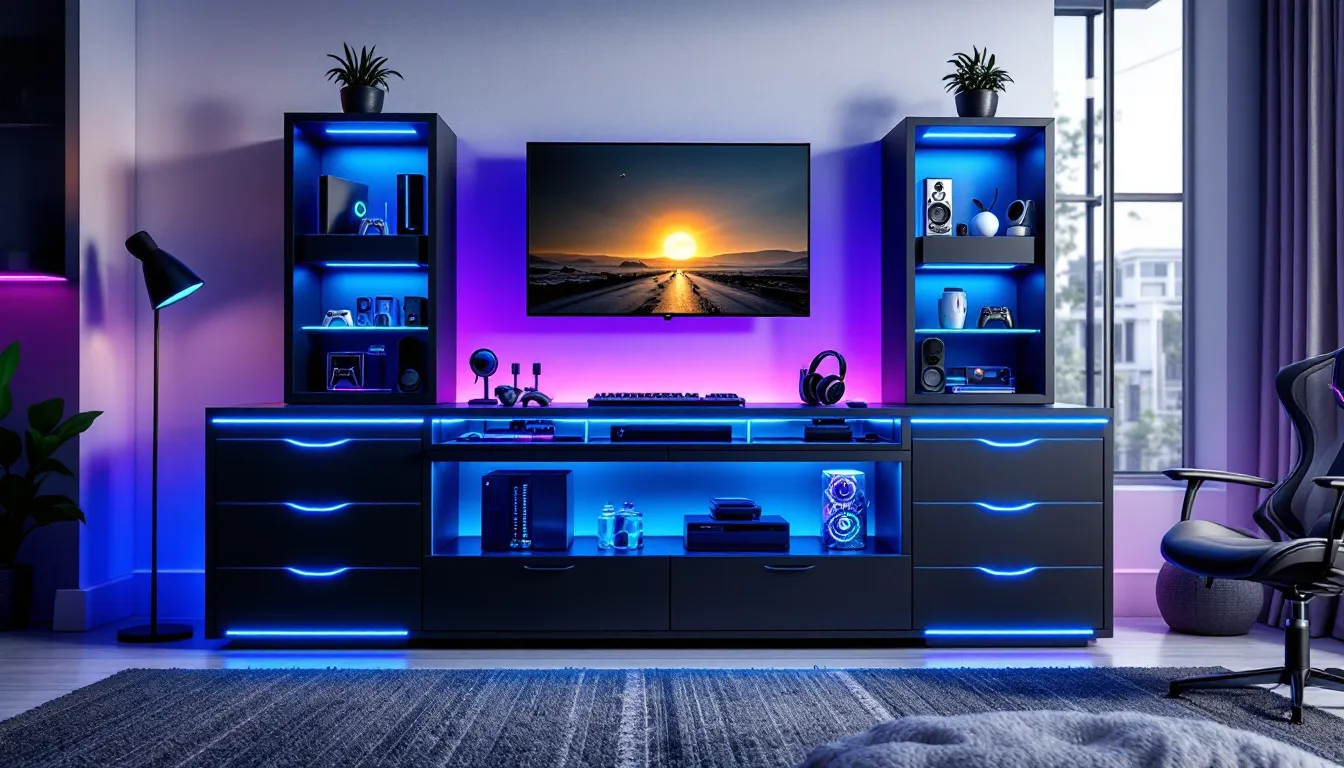

Your gaming setup is more than just a monitor and a keyboard, it’s a sanctuary where you sink hours grinding ranked matches, chasing speedrun records, or exploring massive open worlds. But here’s the thing: most gamers overlook one crucial piece of furniture that can dramatically improve both their space and their experience. A gaming dresser isn’t just somewhere to throw your controllers and energy drink cans. It’s a functional, stylish centerpiece designed specifically for the chaos of modern gaming, cable management, RGB lighting, storage for dozens of accessories, and a footprint that actually fits in a room that isn’t a custom-built gaming mansion. Whether you’re a competitive FPS player optimizing every inch of desk real estate, a console enthusiast juggling multiple controllers, or someone who simply wants their gaming room to look less like a tornado hit it, the right gaming dresser can be a game-changer. This guide breaks down everything you need to know about choosing, setting up, and maintaining a gaming dresser that works for your playstyle and your space.
Key Takeaways
- A gaming dresser is specifically engineered for cable management, RGB compatibility, and gaming accessory storage, setting it apart from standard furniture designed for clothing.
- Essential features to prioritize include integrated cable routing, RGB lighting with sync capabilities, adjustable storage compartments, and durable construction that handles heavy use across console generations.
- Gaming dressers range from budget-friendly IKEA hacks under $400 to premium models over $800—mid-range options ($400–$800) offer the best value for most gamers seeking quality and longevity.
- Proper organization of a gaming dresser requires categorizing gear by type, using labeled drawer dividers, and reserving space for only actively used items to prevent unnecessary clutter.
- Regular maintenance with microfiber cloths, monthly vacuuming of interior compartments, and protective power management extend your gaming dresser’s lifespan and protect integrated RGB electronics.
- Choose a gaming dresser style and size that complements your room’s color scheme and fits your available space, positioning it strategically to support your gaming workflow without blocking pathways.
What Is a Gaming Dresser and Why Gamers Need One
The Intersection of Gaming and Room Organization
A gaming dresser is a piece of furniture specifically designed to bridge the gap between style and storage in a gamer’s room. Unlike a standard dresser, it’s engineered with gaming in mind: cable routing, RGB compatibility, display space for collectibles, and organization built into every drawer and shelf. The gaming industry has exploded in the past decade, and with it, so has the amount of gear that gamers accumulate.
Think about it. You’ve got your main gaming mouse, your backup mouse, multiple controllers, charging cables, RGB hub adapters, wireless receivers, cables for different systems, and probably a handful of gaming-branded merchandise sitting somewhere. A gaming dresser consolidates all of this into one central, organized point in your room. It eliminates the desk clutter that would otherwise creep into your peripheral vision during a ranked match or streaming session. Some gamers report that having a dedicated, organized storage space actually improves focus, less visual noise in the room means fewer distractions.
Beyond functionality, a gaming dresser signals intentionality about your space. Instead of cramming gaming gear into a corner or leaving controllers scattered across a nightstand, you’re creating a curated, purpose-built environment that reflects your hobby as a serious passion.
How a Gaming Dresser Differs From Standard Furniture
A standard dresser is built for clothes. It has deep drawers, minimal aesthetic consideration for visibility, and zero thought given to electronics or cables. A gaming dresser flips this completely. The differences start with cable management, gaming dressers feature built-in cable routing, pass-through holes, and sometimes dedicated cable trays to keep cords organized and out of sight. They’re designed so you can actually see and access your gear without triggering an avalanche of tangled wires.
The aesthetic is tailored too. Gaming dressers often feature sleek surfaces suitable for RGB accent lighting, tempered glass panels to showcase collectibles or gear, and modern angular designs that complement gaming room aesthetics. Many include integrated LED lighting that syncs with your PC or console setup via USB or wireless connections. Standard dressers? They’re built to blend into the background of a bedroom.
Storage configuration is another key difference. Gaming dressers typically feature shallow drawers or compartmentalized sections perfect for organizing controllers, mice, headsets, and cables rather than the deep drawers built for folded clothing. Some models include vertical storage, modular inserts, and display shelving, things you’d never find in furniture meant for anything other than gaming.
Finally, build quality often reflects gaming demands. Gaming dressers use materials that handle frequent vibrations (from subwoofers, monitors, or even just opening and closing drawers repeatedly during gaming sessions), support heavier loads from multiple devices, and are constructed with durability in mind since gamers expect furniture built to last through multiple console generations.
Key Features to Look for in a Gaming Dresser
Cable Management and Cord Organization
If you’ve ever stared at the back of your current setup and saw what looked like a nest of cables, you understand why this is priority one. A gaming dresser worth buying has integrated cable management baked in from the design phase.
Look for features like:
- Built-in cable trays beneath shelves or inside drawers to corral cables horizontally
- Pass-through ports on the back and sides so cables don’t have to coil awkwardly
- Adhesive clips or Velcro strips already integrated or easily installable
- Separate power management sections where surge protectors or power supplies sit out of sight
- Labeled cable guides to ensure you know which cable goes where when you’re unplugging and reconnecting
Proper cable management isn’t just aesthetic (though it absolutely is). It also improves airflow around power supplies and devices, reduces the risk of accidentally unplugging the wrong cable mid-game, and makes troubleshooting way faster if something breaks. Professional esports players and streamers prioritize this feature because downtime due to cable issues is literally money lost.
RGB Lighting and Aesthetic Appeal
Let’s be real: RGB matters to gamers. It’s not just about looking cool (though it does). Synced RGB lighting creates visual cohesion across your entire setup, and a gaming dresser with built-in RGB support becomes a focal point rather than just a storage bin.
Top-tier gaming dressers feature:
- Integrated RGB strips along shelves, beneath drawers, or along the frame
- USB or wireless sync capability so your dresser lights match your PC’s RGB ecosystem
- Customizable color profiles with at least 16 million color options
- Brightness control to dial in the perfect intensity without blowing out your room
- Pre-programmed modes like reactive, breathing, rainbow cycle, etc.
If you’re running RTINGS-reviewed gaming monitors or a high-end RGB PC setup, you want your dresser to complement that investment, not clash with it. Many modern dressers support popular RGB control software, so they integrate seamlessly into existing setups. Just confirm compatibility before buying, not every dresser works with every RGB ecosystem.
Storage Capacity and Drawer Configuration
Now here’s where practicality meets passion. You need to think about what you’re actually storing and how much space you’ll need.
A solid gaming dresser should provide:
- At least 4-6 drawers of varying depths (shallow for controllers, deeper for bulkier items)
- Adjustable shelving so you can customize compartments based on what you own
- At least 50+ liters of storage capacity minimum, though 80-100+ liters is more realistic if you’re a collector
- Open shelving or glass doors for displaying gaming collectibles, figurines, or limited-edition gear
- Compartments sized for standard gear (controller-sized slots, monitor arm clamp space, etc.)
Think about your own inventory. How many controllers do you own? How many gaming mice? Backup headsets? Cables, adapters, and charging docks? Once you add it up, most gamers need more space than they initially estimate. A undersized dresser becomes a source of frustration rather than organization.
Durability and Build Quality
A gaming dresser isn’t a cheap impulse buy, and it shouldn’t feel flimsy. Look for:
- Solid wood or high-grade engineered wood (plywood substrate, not particleboard)
- Metal reinforcement on frame joints and drawer slides
- Soft-close drawer mechanisms so drawers don’t slam shut or derail under repeated use
- Rounded edges and scratch-resistant finishes since gaming rooms see a lot of activity
- Weight capacity clearly listed and realistic for your needs (at least 50 lbs per shelf)
- Warranty of at least 2-3 years covering manufacturing defects
You’re making an investment here. A quality gaming dresser should last through multiple gaming console generations, several PC upgrades, and years of heavy use without the drawers becoming loose or the finish deteriorating.
Gaming Dresser Styles and Designs
Minimalist and Sleek Designs
Minimalist gaming dressers are perfect if you prefer clean lines and understated aesthetics. These pieces typically feature monochromatic color schemes, blacks, whites, grays, or natural wood tones, with minimal visual clutter. Drawers are flush-mounted, hardware is hidden, and the overall silhouette is simple and rectangular.
The appeal here is that a minimalist dresser doesn’t scream “gaming furniture.” It blends into any modern room, making it ideal if you share your space with non-gamers or prefer a more professional-looking setup. The focus shifts to function and subtle, sophisticated design rather than flashy RGB or angular edges.
These dressers often pair well with contemporary gaming setups that emphasize cable management and lighting over visual drama. They’re also typically less expensive than more elaborate designs, making them a solid entry point for gamers new to dedicated gaming furniture.
Bold and RGB-Heavy Gaming Aesthetics
On the opposite end of the spectrum are gaming dressers designed to make a statement. These feature angular, aggressive designs with pronounced edges, often in colors like blood red, midnight black, gunmetal gray, or neon accents. RGB lighting isn’t optional, it’s integrated throughout, sometimes with multiple independently controllable zones so different sections can display different colors simultaneously.
These dressers are for gamers who want their room to feel like a gaming command center. They’re conversation starters, collector’s pieces, and a visual representation of gaming passion. If your PC has a tempered glass side panel with RGB-lit components, or your setup includes a high-end gaming monitor and peripherals, a bold dresser ties the entire aesthetic together.
The trade-off? These designs can feel dated if gaming aesthetics shift, and they require more intentional room coordination. You can’t just plop one in any room and have it work, you’re committing to a specific gaming-centric vibe.
Industrial and Modular Options
Industrial-style gaming dressers blend raw materials, exposed metal frames, reclaimed wood tops, concrete finishes, with functional gaming features. They often feature modular shelving where you can rearrange, add, or remove sections based on your current needs. This flexibility is huge for gamers whose gear evolves constantly.
The aesthetic is utilitarian and rugged, appealing to gamers who appreciate form following function. Metal and wood construction is often exceptionally durable, and the modular nature means you’re not locked into one configuration. Need more vertical space next year? Just add another shelf module. Got new gear that requires different storage? Reconfigure the interior.
Industrial dressers are also versatile enough to fit multiple room aesthetics, they work in minimalist spaces, gamer caves, apartments, and even professional streaming setups. They’re often mid-to-premium priced because of the quality materials and customization, but the longevity and flexibility justify the investment for many gamers.
How to Choose the Right Gaming Dresser for Your Setup
Assessing Your Space and Layout
Before you start looking at specific models, measure your room and your available wall space. A gaming dresser can range from compact 24-inch-wide units to sprawling 60-inch monsters. Know your constraints first.
Consider these measurements:
- Wall space available (length and height)
- Distance to electrical outlets (you’ll likely need nearby power for RGB sync and device charging)
- Clearance for doors, windows, or other furniture so the dresser doesn’t block pathways
- Distance to your gaming setup (closer is better for cable management)
- Vertical clearance if you’re mounting it under a window or against shelving
Also think about traffic flow. If your dresser is going to block your main path to the door, that’s not ideal. Gamers often have friends or family visiting their rooms, and you don’t want your storage furniture to feel like an obstacle.
Finally, consider future changes. Will you upgrade to a larger monitor next year? Might you add a second desk? A bit of future-proofing in your initial placement decision pays dividends. Some gamers place their dresser perpendicular to their main desk rather than directly against a wall, creating a secondary “gear station” that doesn’t interfere with gaming workflow.
Matching Your Gaming Room’s Color Scheme
Your gaming dresser should complement, not clash with, your existing setup. If you’ve already invested in a monitor, headset stand, or desk with a specific aesthetic, your dresser should feel intentional, not like an afterthought.
Start by identifying your room’s dominant colors:
- Cool tones (blacks, grays, blues, purples) pair well with minimalist or industrial dressers
- Warm tones (browns, tans, oranges) work with natural wood or retro gaming aesthetics
- High-contrast setups (bright RGB against dark surfaces) demand equally bold dresser aesthetics
- Neutral bases (whites, grays) are flexible and work with nearly any dresser style
RGB lighting adds another layer. If your current setup features predominantly cool-toned RGB (blues, purples, whites), choose a dresser whose RGB can match or complement those hues. Mismatched lighting feels chaotic, even if the intention was cool.
ProSettings and other professional gaming setup guides emphasize visual cohesion, your room should feel intentional, not like you just bought random furniture. Spend time browsing photos of completed gaming setups to see what resonates with you, then build your dresser choice around that vision.
Budget Considerations and Value for Money
Gaming dressers range from $200 budget models to $1,500+ premium pieces. Your budget determines what’s realistic, but don’t confuse cheap with good value.
Here’s a practical breakdown:
- $200-$400 (Budget): Basic storage, minimal cable management, simpler RGB or none at all. Fine if you’re just starting out but may feel limiting quickly.
- $400-$800 (Mid-Range): Solid cable management, integrated RGB, good storage capacity, quality construction. This is where most gamers find excellent value.
- $800-$1,500+ (Premium): Top-tier materials, advanced RGB sync, modular customization, warranty support. Justified if you’re building a high-end setup or want something that’ll last 10+ years.
Consider cost-per-year. A $600 dresser used for 5+ years costs about $120 per year. A $300 dresser that breaks down in 2 years costs $150 per year and leaves you in the lurch. Buy based on quality and longevity, not just sticker price.
Also factor in delivery and setup costs, which aren’t always included. Some premium dressers come with white-glove delivery and assembly, which saves time and frustration. Budget models might require you to assemble from a flat-pack, which can take several hours.
Gaming Dresser Organization Tips and Hacks
Organizing Gaming Accessories and Gear
Having the storage is only half the battle. You need a system that actually works for your habits.
Start by categorizing your gear:
- Controllers (primary, backup, retro, different console types)
- Mice and peripherals (gaming mouse, backup mouse, mousepad, feet replacement kits)
- Cables and adapters (USB, HDMI, audio cables, power adapters for different devices)
- Headsets (main gaming headset, streaming headset, chat-only microphone)
- Collectibles and merch (limited editions, signed items, team memorabilia)
- Maintenance items (compressed air, lens cleaner, mechanical switch puller)
Assign specific drawers to specific categories. Use small compartment dividers (available at most hardware stores) to prevent items from shifting around. Label your drawers, this sounds basic, but it means you’ll actually keep things organized long-term instead of tossing items wherever when you’re in a hurry.
Rotate seasonal items. If you have esports team merchandise or limited-edition gear you’re not currently using, store it in less accessible drawers. Keep your most-used items, primary controller, main mouse, current headset, in the most convenient spots.
For cables, use cable ties or velcro straps, but avoid tying them too tight (it damages the cable insulation over time). Coil cables loosely, label both ends with a label maker or masking tape, and store by type. All USB cables in one section, all power cables in another. When you need a specific cable, you’ll find it instantly rather than hunting through a spaghetti mess.
Clever Storage Solutions for Limited Space
Not everyone has a sprawling gaming room. If you’re working with limited space, vertical storage becomes your best friend.
Try these hacks:
- Vertical shelf dividers inside drawers let you store controllers upright, saving horizontal space
- Pegboard backing on the back panel or inside deeper drawers creates extra hanging space for cables and headset arms
- Magnetic strips attached to drawer interiors hold metal components (replacement mouse feet, screws, etc.) safely and visibly
- Stackable drawer organizers turn one large drawer into multiple organized sections
- Over-door organizers on the dresser’s side panel add storage without expanding the footprint
- Hanging pouches inside deeper drawers maximize vertical space for smaller items
If your dresser has open shelving, use vertical stands or bookends to maximize shelf depth. Store monitors or collectibles upright rather than flat when possible. This sounds like a small change, but it frees up surprising amounts of usable space.
Also consider what doesn’t need to be in your dresser. Your main gaming mouse lives on your desk. Your current headset hangs on a stand. Only backup and emergency gear goes into the dresser. This mindset prevents unnecessary clutter and keeps your actual gaming space lean and functional.
When implementing how-to gaming setup tutorials, gamers often discover that constraint breeds creativity. Limited dresser space forces you to be intentional about what you actually use and keep.
Popular Gaming Dresser Options Worth Considering
Budget-Friendly Alternatives
If you’re not ready to commit $500+ to a gaming dresser, there are legitimately solid options under $400.
IKEA’s BESTÅ or IVAR series modified with gaming-specific accessories represents the ultimate budget hack. These modular systems start around $150-$250 and let you add cable management and RGB strips as needed. Gamers have extensively documented how to transform these IKEA pieces into functional gaming storage, and communities share customization guides. The downside? You’re doing significant DIY work, and it requires some technical confidence.
Smaller dedicated gaming dressers from brands like Tribesigns or DEVAISE run $250-$350 and actually include gaming features built-in. They’re narrower than full-size dressers, making them perfect for smaller rooms, and most feature basic RGB lighting and decent cable management. Reviews from actual gamers are generally positive, with common praise for assembly difficulty being moderate and durability being acceptable at the price point.
The trade-off with budget options? You’re often getting less storage capacity, simpler RGB control, and construction materials that won’t survive 10+ years of heavy use without degradation. But for a first gaming dresser or a secondary storage piece, they’re absolutely viable.
Mid-Range Gaming Dressers
The $400-$800 sweet spot is where most gamers find their ideal balance of features, quality, and price.
Gaming-specific brands like Secretlab, Autonomous, or NZXT occupy this space and understand gamer requirements. They typically feature solid cable management, integrated RGB that syncs with major ecosystems, good storage configurations, and construction quality that lasts. Many offer modular designs, so you can expand or reconfigure later.
Secretlab’s approach emphasizes minimalist aesthetics paired with premium materials and thoughtful cable routing. These dressers don’t scream “gaming,” but they perform exceptionally well for competitive setups where distraction reduction matters.
NZXT’s offering appeals to gamers who want more visual personality. They integrate RGB more prominently, feature modern angular designs, and often sync directly with gaming PC RGB ecosystems. These are for gamers who view their dresser as a visual centerpiece.
Mid-range options typically include 2-3 year warranties, solid customer support, and a community of users sharing setup tips and customization ideas. This is where you start feeling like you’re buying intentional gaming furniture rather than retrofitting general furniture.
Premium and High-End Models
If you’re dropping $800+ on a gaming dresser, you’re investing in longevity, advanced features, and often status as a collector’s piece.
Premium gaming dresser brands like Herman Miller Gaming (formerly Herman Miller x Logitech collaboration), or high-end custom builders offer game-changing features:
- Advanced RGB with programmable lighting zones that sync not just with your PC but with your room’s smart home setup
- Premium materials like genuine wood, brushed aluminum, or carbon fiber accents
- Lifetime warranties or extended 5-10 year coverage
- Advanced cable management with motorized routing or hydraulic organization systems
- Modular ecosystems where you buy a base unit and stack expansions as needed
These high-end pieces are often purchased by professional esports players, streamers with corporate sponsorships, or serious collectors who view them as long-term investments. They’re featured in tour videos and sponsored gameplay setups because they represent the apex of gaming furniture design.
The question isn’t really “is this worth it?” but rather “do I plan to maintain this setup for 10+ years?” If yes, premium quality makes sense. If you think you’ll change your setup in 2-3 years, mid-range is smarter.
Maintenance and Care for Your Gaming Dresser
Cleaning and Dusting Best Practices
A gaming dresser in an active gaming room accumulates dust fast. That’s not a problem if you maintain it, but neglect turns dust into a real headache.
Weekly maintenance:
- Use a microfiber cloth (the same ones you’d use for a monitor) to wipe exterior surfaces gently.
- Avoid liquids unless absolutely necessary, microfiber picks up dust dry, which is actually more effective.
- Pay attention to cable ports and RGB components: dust buildup here reduces light output and can cause connection issues.
Monthly deep cleaning:
- Open all drawers and use a handheld vacuum with a brush attachment (low suction) to remove dust from interior compartments.
- Don’t vacuum tempered glass panels if your dresser has them, use a soft cloth instead.
- Wipe down cable ties and cord management components: dust loves accumulating on cables.
Avoid:
- Harsh chemical cleaners that damage finishes or leave streaks
- Excessive moisture (one damp cloth is fine, don’t soak anything)
- Abrasive sponges that scratch surfaces
- Vacuum cleaners with high suction near delicate RGB components
Consider a light protective film on high-touch surfaces like drawer handles and the top surface where you might set drinks or gear. A small scratch looks like neglect: a protected surface maintains that new-setup feel for years.
Protecting RGB Components and Electronics
If your dresser features integrated RGB lighting or USB power management, protecting these electronics extends their lifespan significantly.
Power management:
- Use a surge protector rated for your total amp draw (calculate this by adding up the wattage of all connected devices and dividing by 120)
- Don’t overload a single outlet: if you’re syncing multiple RGB devices, distribute across outlets
- Consider a smart power strip that you can control remotely, allowing you to shut down RGB and standby power when you’re not gaming
Cable and connection care:
- Don’t yank cables when disconnecting: grasp the connector itself, not the cable
- If your dresser has built-in USB ports, use a powered USB hub rather than drawing power directly from the dresser if possible (reduces strain on internal components)
- Check cable connections every few months: loose connections create heat, which damages components
Moisture and temperature:
- Keep your gaming room between 50-85°F (10-29°C) for optimal RGB component longevity
- Avoid direct sunlight on RGB components: it fades LEDs and damages plastic components
- If you’re in a humid climate, consider a small dehumidifier near your dresser (especially if it houses electronics)
Firmware and software:
- Keep your RGB control software updated if your dresser syncs via app or firmware
- Outdated software can cause compatibility issues with new devices or operating system updates
- Check the manufacturer’s website quarterly for updates
Think of your dresser like any piece of gaming hardware: regular maintenance and careful usage extend its lifespan exponentially compared to neglect.
Conclusion
A gaming dresser is a deceptively important investment in your gaming space. It’s not just about aesthetics or following trends, it’s about creating a functional, organized environment where you can focus on what actually matters: the game itself.
The right dresser eliminates visual clutter, centralizes your gear, manages cables that would otherwise become a nightmare, and gives your room an intentional, polished appearance that reflects your gaming identity. Whether you’re a competitive player optimizing for minimal distractions, a streamer building a professional-looking environment, or a collector showcasing limited-edition gear, there’s a gaming dresser designed for your needs.
Start by assessing your space, identifying what gear you actually own and need to store, and determining your budget. Then match those constraints to the features that matter most to you, cable management, RGB syncing, storage configuration, or modular flexibility. Don’t overspend chasing brand names, but don’t cheap out on durability either. A mid-range gaming dresser used well for 5+ years delivers better value than a budget option replaced every 2 years.
Once you’ve selected your dresser, organize it intentionally, maintain it regularly, and enjoy the improved functionality and aesthetics it brings to your gaming space. Your future self, the one diving into the next console generation with a perfectly organized setup, will thank you.