
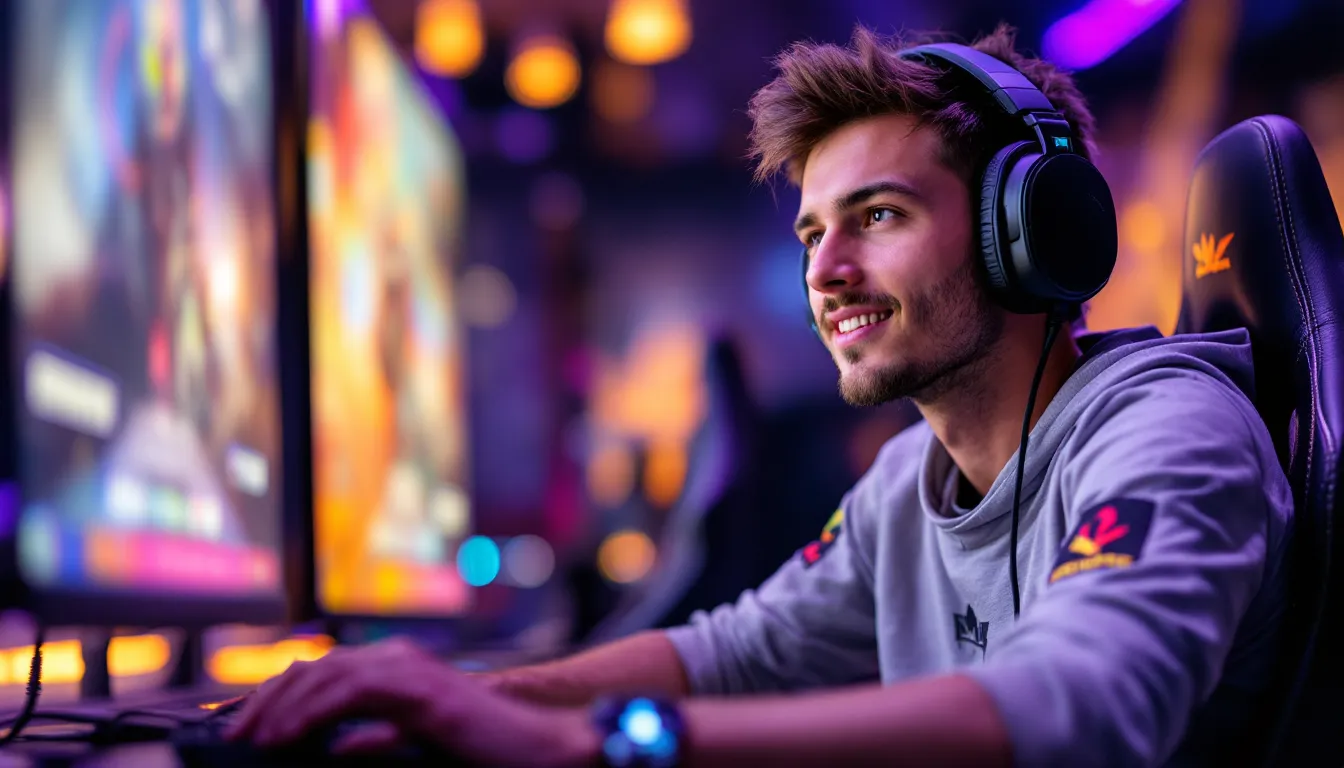

If you’ve landed on this page, you’re either curious about grover gaming or you’ve heard the buzz and want in. The competitive grover gaming scene has exploded over the past couple of years, drawing thousands of players into a community that rewards precision, strategy, and relentless practice. Whether you’re a complete newcomer or someone with casual gaming experience, this guide will walk you through everything you need to know to start competing at a serious level. We’ll cover the mechanics, the gear, the strategies, and the path forward, no fluff, just what actually matters in 2026.
Key Takeaways
- Grover gaming is a skill-based competitive discipline that requires precision, strategy, and practice—with legitimate career potential through prize pools, sponsorships, and streaming revenue.
- Master the core movement techniques (strafe jumping, slide canceling, air strafing) and maintain consistent crosshair placement at head level to gain a competitive edge over opponents.
- Invest in reliable hardware including a 144Hz+ monitor, lightweight mouse with low-latency sensors, and mechanical keyboard—these eliminate barriers between your actions and screen performance.
- Smart positioning and map knowledge matter more than raw mechanical skill; always hold power positions with escape routes and manage team economy strategically in round-based modes.
- Serious progression requires structured practice: 40% ranked matches, 40% custom mechanics training, and 20% pro VOD study, plus daily aim trainer sessions to see measurable improvement.
- Join community Discord servers, study patch notes, form or find a competitive team, and review gameplay frame-by-frame to identify mistakes—this separates top players from the rest.
What Is Grover Gaming and Why It Matters
Grover gaming has become one of the most talked-about competitive verticals in the gaming landscape. It’s a skill-based discipline that demands quick reflexes, tactical thinking, and deep map knowledge. Unlike casual gaming, grover gaming operates under strict competitive rule sets, standardized equipment, and tournament structures that have legitimized it as an esports title.
Why does it matter? The competitive scene has matured significantly. Prize pools have grown from five figures to six figures and beyond. Professional players are earning sponsorships, streaming revenue, and salaries that rival traditional careers. The community is welcoming, the skill ceiling is incredibly high, and the barrier to entry, while challenging, is lower than many assume.
Grover gaming isn’t just about raw aim or reflexes. It’s about understanding positioning, resource management, and decision-making under pressure. Players who excel aren’t necessarily the fastest clickers: they’re the ones who predict their opponent’s next move and position themselves to punish mistakes. The meta evolves every patch, keeping the game fresh and forcing players to adapt constantly.
The Core Mechanics and Gameplay Fundamentals
Before you can compete, you need to understand what you’re actually doing. Grover gaming is built on a foundation of mechanics that, once mastered, separate casual players from competitors.
Essential Controls and Movement Techniques
Movement is your foundation. The core movement abilities in grover gaming are strafe jumping, slide canceling, and air strafing. These techniques allow you to maintain momentum while changing direction, making you harder to hit while closing distance on enemies.
Strafe jumping is performed by jumping while holding A or D (left or right movement keys) and moving your mouse in the same direction. This builds momentum and lets you traverse maps at speeds that walking simply can’t match. You’ll want to bind jump to a mouse button (usually scroll wheel) to ensure consistent execution.
Slide canceling lets you maintain sprinting speed while aiming down sights (ADS), which is critical in gunfights. The timing window is tight, practice this in custom games until it becomes muscle memory.
Aim and sensitivity are equally important. Most competitive grover players run sensitivities between 30-50cm per 360 degrees (when measured in-game), which translates to full range of motion arm aiming. Lower sensitivities reduce jitter and improve consistency on medium to long-range targets. Test your sensitivity by playing aim trainers and adjusting based on what feels natural, there’s no universal “best” setting, but tracking and flicking should feel smooth, not herky-jerky.
Combat Strategies and Positioning
You can have perfect aim and still lose rounds because of positioning. Grover gaming rewards smart positioning more than raw mechanical skill.
Hold power positions: Always understand which areas of the map grant information advantage or choke control. High ground is valuable but exposed: cover is essential. Never commit to holding a position where you can only see one lane of approach. Position yourself where you have escape routes.
Trade kills: In team modes, trading kills, where your teammate eliminates the opponent who kills you, flips a 1v1 disadvantage into a manageable situation. Position yourself so that if you engage, your team has a clear follow-up.
Crosshair placement: Keep your crosshair at head level at all times. Pre-aim common angles. This single habit probably cuts your time-to-kill (TTK) by 0.2-0.3 seconds, which is massive in grover gaming’s fast-paced engagements.
Economy management: In round-based modes, understanding when to buy, when to save, and when to force-buy is critical. A strong economy lets you equip your team with high-tier loadouts and grenades, directly impacting round win probability.
Building Your First Grover Setup and Configuration
Your hardware and in-game settings directly impact your performance. Invest wisely, and you’ll remove a barrier between your brain and your actions on screen.
Hardware Requirements and Recommendations
You don’t need top-tier hardware to compete, but you do need reliable hardware. Here’s the baseline:
Monitor: A 144Hz+ monitor with low input lag (under 5ms) is essential. Most pro players use 240Hz or 360Hz displays, the fluidity is noticeable and competitive advantage is real. Asus, BenQ, and LG dominate the competitive space for good reason.
Mouse: Lightweight mice (50-70 grams) with low latency sensors are standard. Razer, Logitech, and Finalmouse are popular among pro players. What matters: low DPI deviation, consistent tracking, and comfort. Spend $50-100 on a good mouse, it’s non-negotiable.
Keyboard: A 60% or 75% mechanical keyboard works fine. Gateron Yellow switches are popular because they’re linear, quick, and have low actuation force. Spend $80-150 for something reliable.
Headset: Positional audio matters in grover gaming. Astro A40 and SteelSeries headsets are industry standard. Your hearing is a sensor, invest accordingly.
PC/Console specifications: For PC, you need a GPU that can push 240+ FPS at competitive settings (RTX 4070 Super or better). CPU matters, a mid-range Ryzen 7 or Intel i7 works. Grover gaming is available on PC (Steam/Epic), PS5, and **Xbox Series X
|
S**. The competitive scene is primarily PC, though console lobbies are growing.
Optimal Settings for Performance
In-game settings should prioritize responsiveness over visuals. Here’s the hierarchy:
Display settings: Set resolution to native (usually 1920×1440 or 2560×1440). Turn on high refresh rate mode. Unlock your FPS cap (or set it 20-30 frames above your monitor’s refresh rate to reduce input lag).
Graphics: Set all graphics to low. The only exception is turning shadows on (low quality), positional awareness through shadows is valuable. Disable motion blur, film grain, and depth of field entirely.
Mouse settings: Match your in-game DPI to your sensitivity tests. Disable mouse acceleration in Windows and in-game. Raw input must be ON.
Crosshair: Use a small, static crosshair. Most pros use a dot or minimal lines. Your crosshair should be visible without being distracting.
Pro players documented across ProSettings’s comprehensive database show remarkable consistency in these choices, they’ve converged on these settings because they work.
Advanced Techniques to Elevate Your Gameplay
Once you’ve nailed the fundamentals, it’s time to separate yourself from the pack. The gap between decent players and great ones is usually mental, not mechanical.
Pro Tips From Top Players
Demo review and self-critique: Top players spend as much time reviewing replays as they do playing. Watch your deaths frame-by-frame. Where did your crosshair placement fail? What information did you miss? What could you have done differently? This is how legends improve exponentially.
Use aim trainers: 30 minutes in Aim Lab or Kovaak’s before competing should be your routine. Focus on the exercises that match your weaknesses, if you struggle with flicking, grind flick maps: if tracking is weak, focus on tracking scenarios. Data shows that aim training 5+ days per week correlates with rank progression.
Study the meta: The competitive meta shifts with patches. Watch IGN’s coverage of patch notes and pro streams to understand which loadouts and strategies are currently dominant. If a weapon gets nerfed or buffed, adapt immediately. Playing yesterday’s meta is a free way to lose ranking points.
Prefire and prefight: Anticipate enemy rotations and prefire common angles before you even see them. This translates to instant kills before enemies can react. Combine prefiring with utility usage (smokes, flashes) to control engagements.
Communication is underrated: In team modes, clear callouts and quick communication create tactical advantages. Don’t just say “enemy left”, say “enemy left, close, low health.” Precise information lets teammates make better decisions faster.
Common Mistakes Beginners Make and How to Avoid Them
Peeking too much: Beginners expose themselves repeatedly from the same angle, dying to repeater shots. Hold an angle, peek once, and reposition. Don’t become predictable.
Chasing kills: You’re low health, an enemy is limping away, and you chase them into enemy territory. Stop. Regroup. Fights in grover gaming are won by teams and positioning, not individual highlights.
Ignoring utility: Grenades, smokes, and flashes win rounds. Beginners hoard utility instead of using it proactively. If you have grenades and haven’t used them this round, you’re probably leaving value on the table.
Bad economy decisions: Buying a full loadout when your team is saving for an eco round breaks team cohesion. Communicate and buy strategically.
High sensitivity: Beginner mistake: cranking sensitivity to “feel fast.” High sensitivity increases jitter and makes precise aim nearly impossible. Lower it. You’ll place better shots, win more duels, and climb ranks faster.
The Competitive Grover Gaming Scene
The infrastructure around grover gaming is legitimate and growing. Understanding where to compete and how to progress is essential if you’re serious.
Tournaments, Leagues, and Community Events
Ranked progression: Most players start in ranked matchmaking. The rank ladder (usually Bronze through Radiant or equivalent) is transparent, climb by winning games. Expect 50-200 hours to reach mid-diamond, and 500+ hours to reach the highest ranks. Progression isn’t just about mechanical skill: it’s about game sense, decision-making, and map knowledge.
Third-party tournaments: Platforms like ESL, BLAST, and regional organizers run tournaments year-round. Entry fees vary from free community tournaments to paid qualifiers. Prize pools in 2026 range from $5,000 for regional qualifiers to $500,000+ for international LANs (local area network events where teams compete in person).
Team formation: Solo queue gets you only so far. Serious players find a team or form one. Team chemistry, consistent practice, and coordinated strategies are what separate ranked players from competitive ones. Look for team open applications on community discord servers and grover gaming forums.
Streaming and content creation: Competitive play attracts viewers. Streaming ranked matches or team scrimmages on Twitch builds an audience and can lead to sponsorships. Top streamers earn from subscriptions, donations, and brand partnerships, sometimes more than tournament prize money.
The community is actively discussed and analyzed across Kotaku’s gaming coverage, which regularly features industry analysis and competitive scene retrospectives. This attention legitimizes grover gaming as a career path for top-tier players and creates inspiration for players climbing the ranks.
Resources for Continuing Your Journey
You’ve got the roadmap. Now let’s talk about where to actually get better.
Aim trainers: Kovaak’s and Aim Lab both have grover gaming-specific training routines built by pros. Spend 30-60 minutes daily, and you’ll see measurable improvement in crosshair placement and reaction time.
Community discord servers: Most games have dedicated competitive discords where players find teammates, share strategies, and organize scrimmages. Join your game’s official or largest community discord immediately.
Pro stream VODs: Watching professionals play (not just highlight reels) teaches you positioning, decision-making, and utility usage. Mute the stream if commentary distracts you, focus on positioning and why pros move where they move.
Coaching: A good coach reviews your gameplay, identifies weaknesses, and gives targeted feedback. Expect $30-100 per hour for credible coaches. One or two sessions can accelerate your progress significantly.
Practice routines: Structure matters. Beginners should spend 40% of their time in ranked, 40% in custom games practicing specific mechanics, and 20% watching pro gameplay. As you rank up, adjust this split based on where you’re weakest.
Patch notes and balance discussions: Read patch notes thoroughly. Join competitive discussion forums to understand how changes affect the meta. Players who adapt fastest to patches maintain their rank: those who lag behind drop quickly.
Conclusion
Grover gaming in 2026 is more accessible and more competitive than ever. You have everything you need: the mechanics are learnable, the resources exist, and the community welcomes newcomers who are willing to put in the work.
Your path forward is clear: build a solid hardware setup, master movement and crosshair placement, study the meta, and find a team. Progress isn’t overnight, it takes hundreds of hours of focused practice. But that’s also what makes it rewarding. The skill progression is measurable, the competition is fair, and reaching the highest ranks means something because the ceiling is genuinely high.
Start with ranked, grind the fundamentals, review your mistakes, and stay hungry. The next big pro player could be someone reading this right now. Make it yourself.